 Skip to content

Personal Care and Cosmetic Product Applications
Personal care packaging is bought by the million and judged on the shelf in a second. A cap has to snap open and shut the same way on every unit, a pump has to dispense cleanly, and a mascara bottle has to look like it came out of one perfect cavity even when it came out of eight. TK’s personal care molds are designed in house for global brand owners, with modular construction, short cycles and stable long runs.
Personal Care Parts TK Builds Molds For
- Flip top caps: toothpaste, shampoo and lotion caps from 12 to 128 cavities, with in mold closing, tamper evident bands and unscrewing cores.
- Dispensing pumps: a series of 6 pump molds at 32 cavities with unscrewing cores for a US program.
- Aerosol and actuator caps: 12 and 16 cavity molds, including an actuator cap with conformal cooling on the core insert.
- Cosmetics: mascara outer bottles and caps in ABS, jars and compacts, valve inserts and household caps.


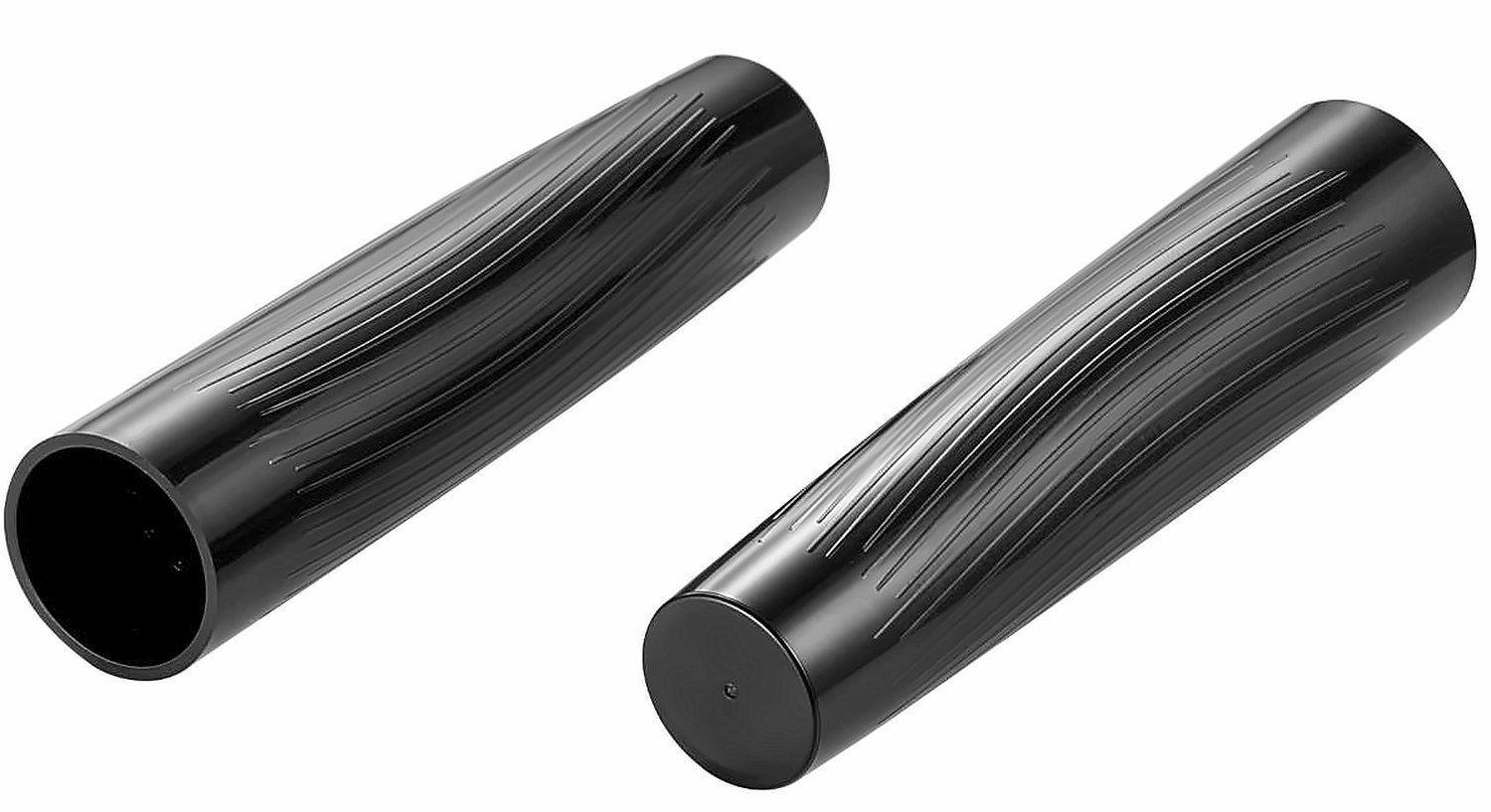
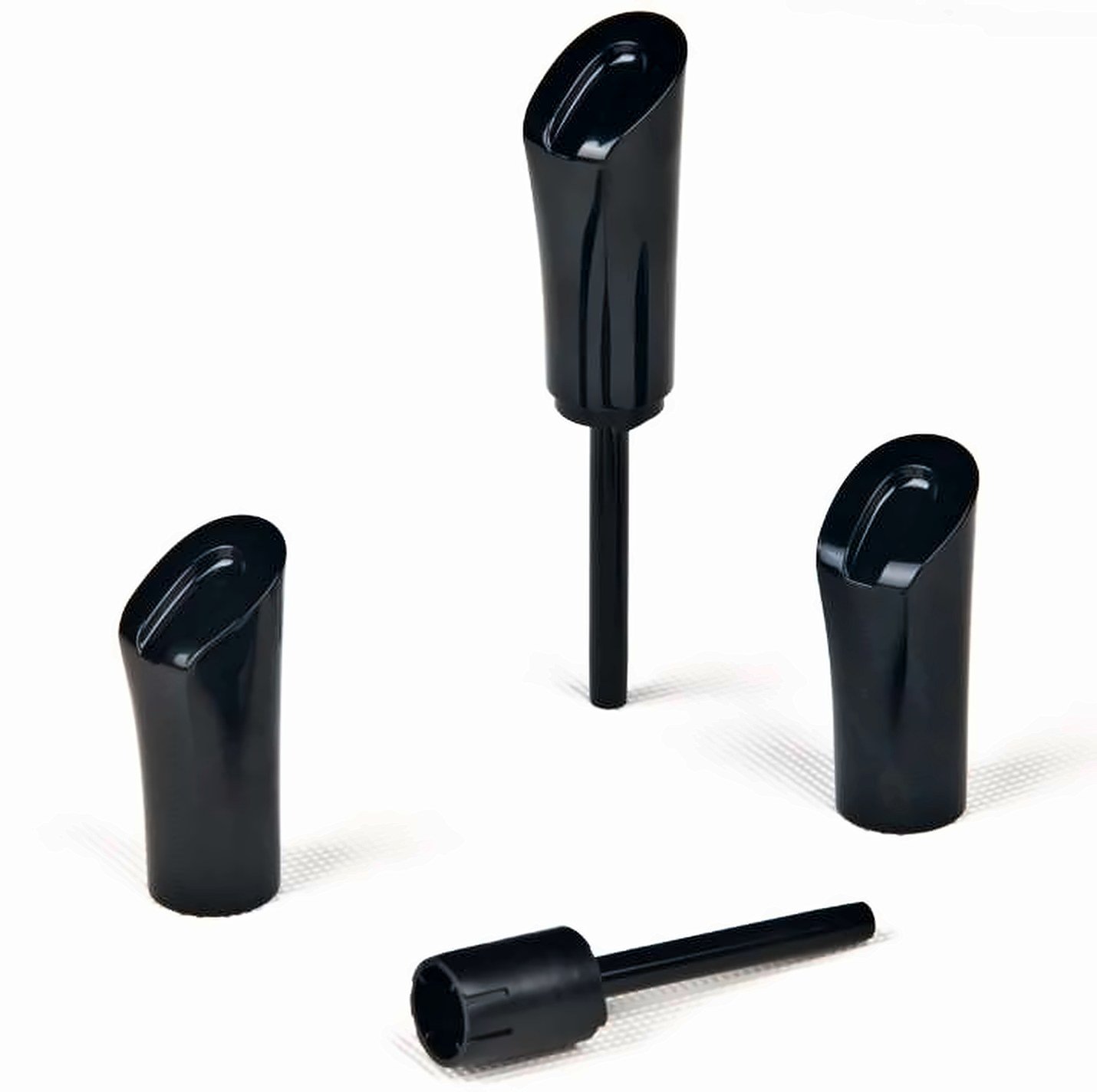
Flip Top Caps With In Mold Closing
A flip top cap is molded with its lid open, lying next to the cap body and joined to it by a thin living hinge, because that is the only way steel can form both the inside of the lid and the deck of the cap. The lid then has to be folded shut. With in mold closing the mold does that itself: once the mold opens and while the hinge is still warm, a hydraulic cylinder mounted on top of the mold drives a closing bar down across each row of cavities. The PTFE fingers on the bars catch each lid, swing it out over its hinge and fold it down until it snaps shut and its spud seats in the orifice. The caps are then ejected closed, ready to pack, with no separate closing machine after the press and no open caps tangling in the box.
How TK Builds It Into Real Molds
- 128 cavity toothpaste flip top cap: in mold closing from the top, with the unscrewing for the thread driven hydraulically. Over 1 million caps a day from one mold, and the cycle was cut from 13 to 12 s on a 380 ton press.
- 32+32 shampoo flip top cap stack mold: servo ejection and in mold closing on both faces, 9.8 g caps at 14 s on 600 tons, for the USA.
- 32 cavity flip top cap with tamper evident band: in mold closing plus the TE design in a mold compact enough for a 220 ton press, three molds in one package.
- 12 and 24 cavity flip top caps: in mold closing with angle sliders, and an unscrewing core on the 12 cavity tool.
The same engineering runs through TK’s packaging and closures molds and high cavitation and stack molds.



TK Personal Care Mold Programs
Real molds from TK’s packaging and personal care case records. Cycle times are production cycles on the press size shown.
| Part | Resin, weight | Cavities | Press | Cycle | Highlights |
|---|---|---|---|---|---|
| Toothpaste flip top cap | PP, 1.15 g | 128 | 380 to 400 T | 11 to 12 s | In mold closing from the top, hydraulic unscrewing, over 1 million caps a day |
| Shampoo flip top cap | PP, 9.8 g | 32+32 stack | 600 T | 14 s | Servo ejection and in mold closing, USA |
| Shampoo flip top cap | PP | 64 | 500 T | 11 s | Moldmax HH inserts for a fast cycle |
| 24 mm flip top cap | PP, 4.57 g | 72 | 400 T | 12 s | 10 weeks from PO to shipment |
| 24 mm flip top cap | PP, 2.97 g | 32 | 300 T | 12 s | In mold closing, 5 versions by changeover |
| Flip top cap with TE band | PP, 2.43 g | 32 | 220 T | 12 s | In mold closing plus TE, 3 molds in one package |
| Toothpaste flip top cap | PP, 1.18 g | 48 | 300 T | 12.5 s | In mold closing, hydraulic motor unscrewing |
| Dispensing pump series | 6 molds | 32 | 300 to 390 T | 9 to 15 s | Unscrewing cores, USA |
| Aerosol cap | PP, 12.3 g | 12 | 300 T | 13 s | Interchangeable versions, alloy and BeCu core pins for cooling |
| Actuator cap | PP | 16 | 400 T | 13 s | Conformal cooling on the core insert, 4 orifice versions |
| Mascara outer cap | ABS, 5.51 g | 8 | 80 T | 14 s | Germany |
| Mascara outer bottle | ABS, 5.1 g | 8 | 100 T | n/a | Special curved shape |
The two toothpaste cap records list 400 T at 11 s and 380 T at 12 s for the same 128 cavity mold. See the actuator cap story on our conformal cooling page.
High Gloss Surfaces and RHCM (Rapid Heat Cycle Molding)
On cosmetic packaging the A side is the product. TK’s consumer packaging molds are built with a mirror polished A side and an invisible gate and parting line, so the visible face carries no gate mark and no witness line. Where a gloss part also has holes, latches or thin walls, the flow fronts can split and meet again on a cold mold surface and leave a weld line or stress marks that polishing the steel cannot fix. That is where rapid heat cycle molding comes in.
TK’s RHCM Experience
- Three ways to heat: TK has built RHCM molds heated electrically, with high pressure steam and by conductive heating, and has worked with RocTool.
- What it is for: a high gloss finish straight from the mold, thin walls, and fewer stress marks and weld lines.
- The trade off: heating and cooling the surface every shot adds equipment and can add cycle time, so it pays to confirm in DFM that a part needs it before building it into the mold.
Gate and weld line positions are checked in Moldflow first. See our DFM and Moldflow review.
Decoration and Secondary Operations
Many cosmetic parts are not finished when they leave the mold. TK Holdings runs painting, metallizing, printing and assembly in house, next to molding, so one supplier is responsible for the mold, the molded part and the decorated part.
Why It Matters for the Mold
Decoration starts in the mold design. A part that will be painted, metallized or printed needs flat, stable areas for the print, gate and ejector marks kept off the decorated face, and a molded surface that suits the coating. Planning the mold and the decoration together avoids discovering at the paint line that the parting line sits across the logo.

For two color and soft touch parts, see multi shot injection molding.
Interactive Cap Mold Output Planner
Start from a real TK personal care mold, then change the cavities, cycle and cap weight to match your program. The planner shows what one mold makes in an hour and a day, how many molds your annual volume needs, the resin you will buy each year and a rule of thumb press size scaled from TK’s mold. Open “Show the math” to see every step.
Show the math
The press size is a rule of thumb that scales the TK reference mold’s tonnage by the number of cavities on one parting face. It is a starting point only; the real clamp force depends on the cap’s projected area, wall thickness, runner and resin, which TK confirms in Moldflow and DFM. Resin use counts finished caps only, with a hot runner and no runner scrap. Reference data is from TK’s packaging and personal care case records. Default numbers are an example only.
Technical Sourcing FAQ: Personal Care Tooling
Launching a Personal Care or Cosmetic Package?
Send your cap, pump or cosmetic part files and volumes to Brandon Henderson, Technical Sales Support Manager for the Americas. He will review cavitation, in mold closing, unscrewing, surface finish and decoration with TK’s engineers.