
Medical & Diagnostic Product Applications
Medical applications demand uncompromising part-to-part consistency, biocompatible material selection, and clean surfaces free of particulate or grease contamination.
Key Medical Product Verticals
- In-Vitro Diagnostic (IVD) Cassettes: Point-of-care rapid testing cartridges featuring microfluidic channels, reagent wells, and ultrasonic weld joints.
- Syringes & Fluid Delivery: High-cavitation (64-cavity and 128-cavity) barrels, plungers, and IV needle hubs molded in medical-grade PP and COP.
- Surgical Instrument Handles: Rigid structural PEEK and glass-filled polyphenylsulfone (PPSU) components designed for autoclave sterilization.
- Respiratory & Anesthesia: LSR elastomeric diaphragms, non-rebreather valves, and transparent optical polycarbonate face masks.
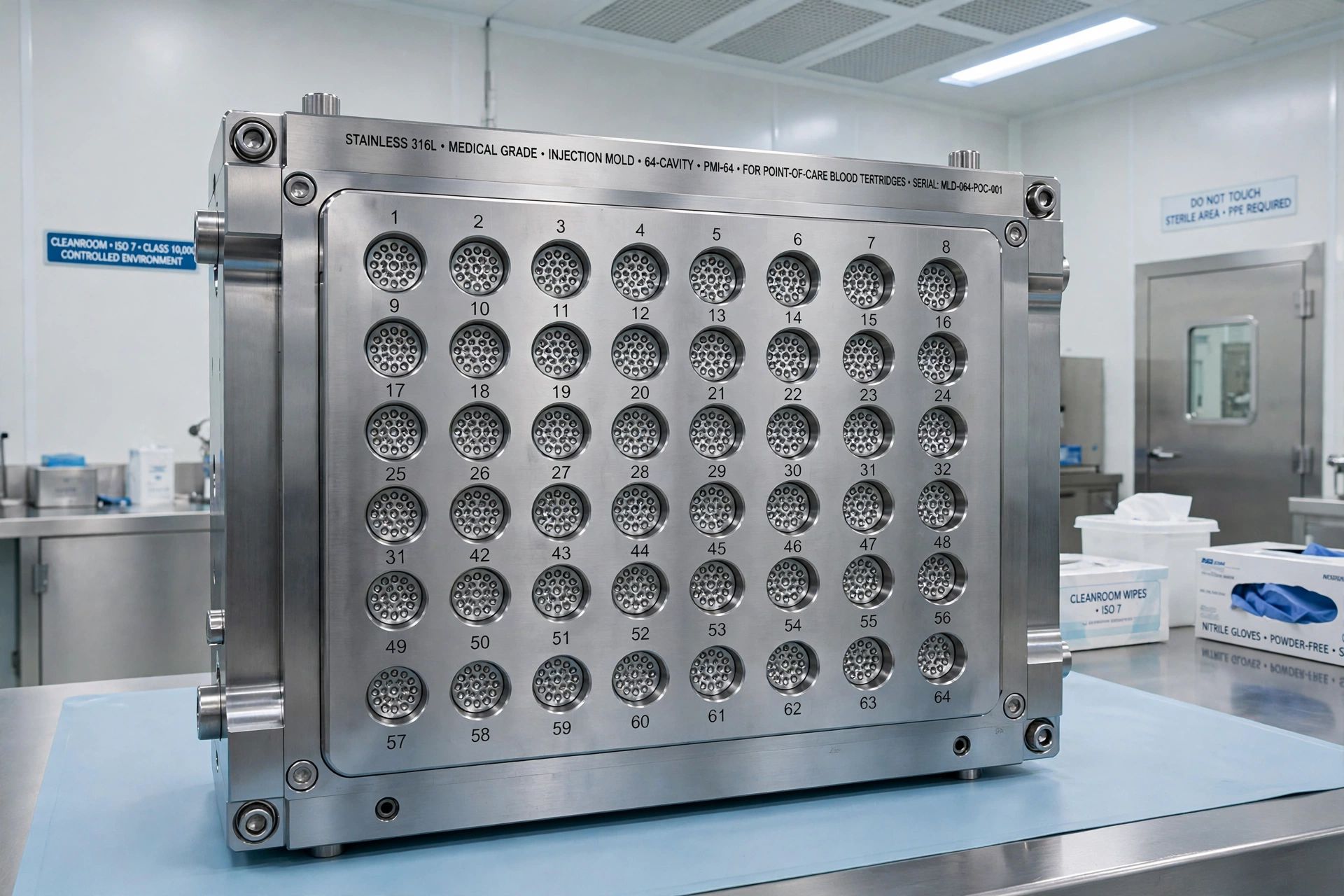
Microfluidic Channel Tooling & Optical Precision
Sub-Micron Machining & Mirror Polish
Diagnostic lab-on-a-chip cartridges require fluid capillary channels measured in microns. Machining these features requires nano-finish high-speed CNC milling spindles (operating at 40,000 RPM) and diamond fly-cutting.
Optical detection windows are hand-lapped with diamond paste to SPI A1 optical clarity, ensuring distortion-free laser fluorescence reading during diagnostic testing. Learn more on our tooling capabilities page.
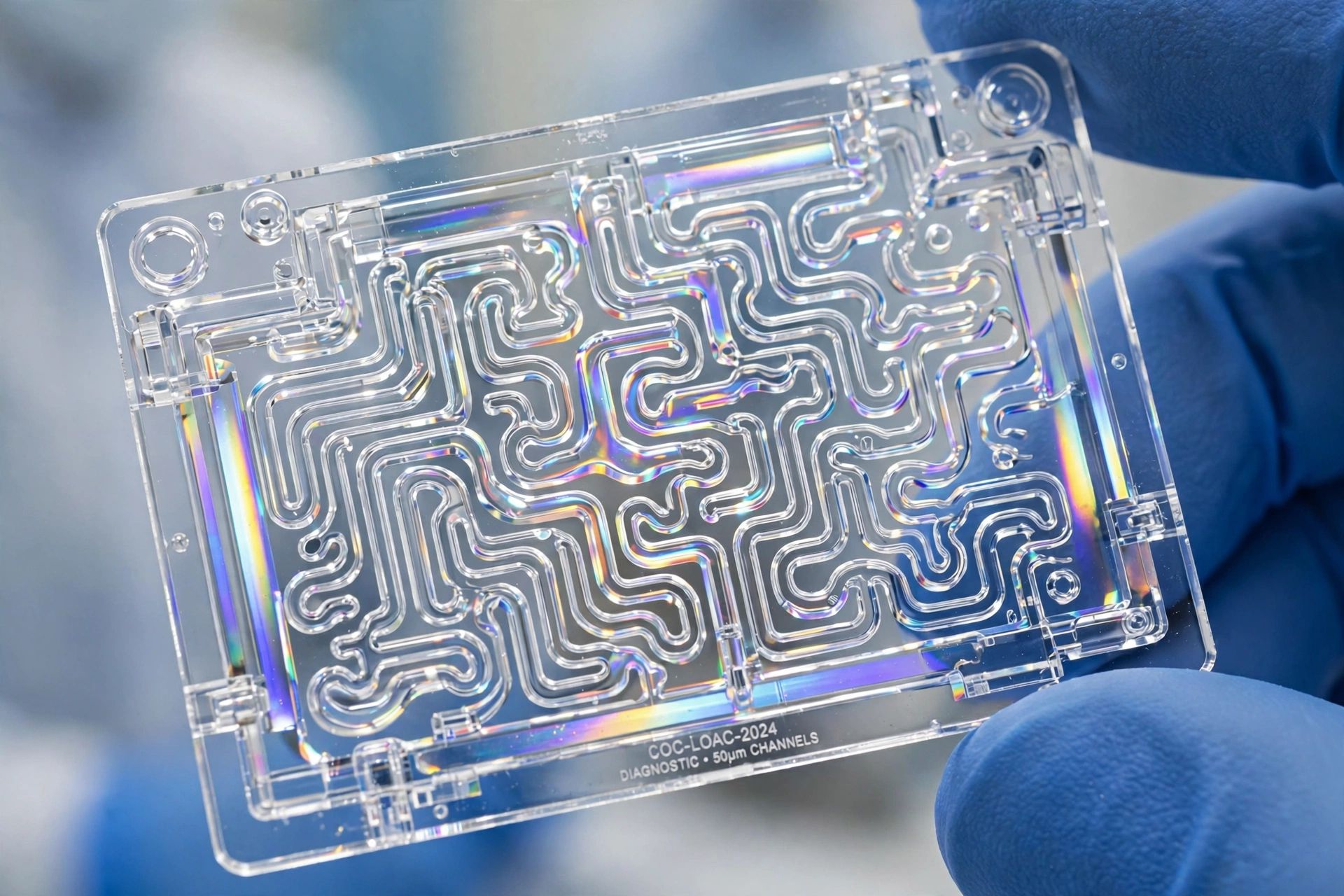
Class 100k Cleanroom Molding & Assembly
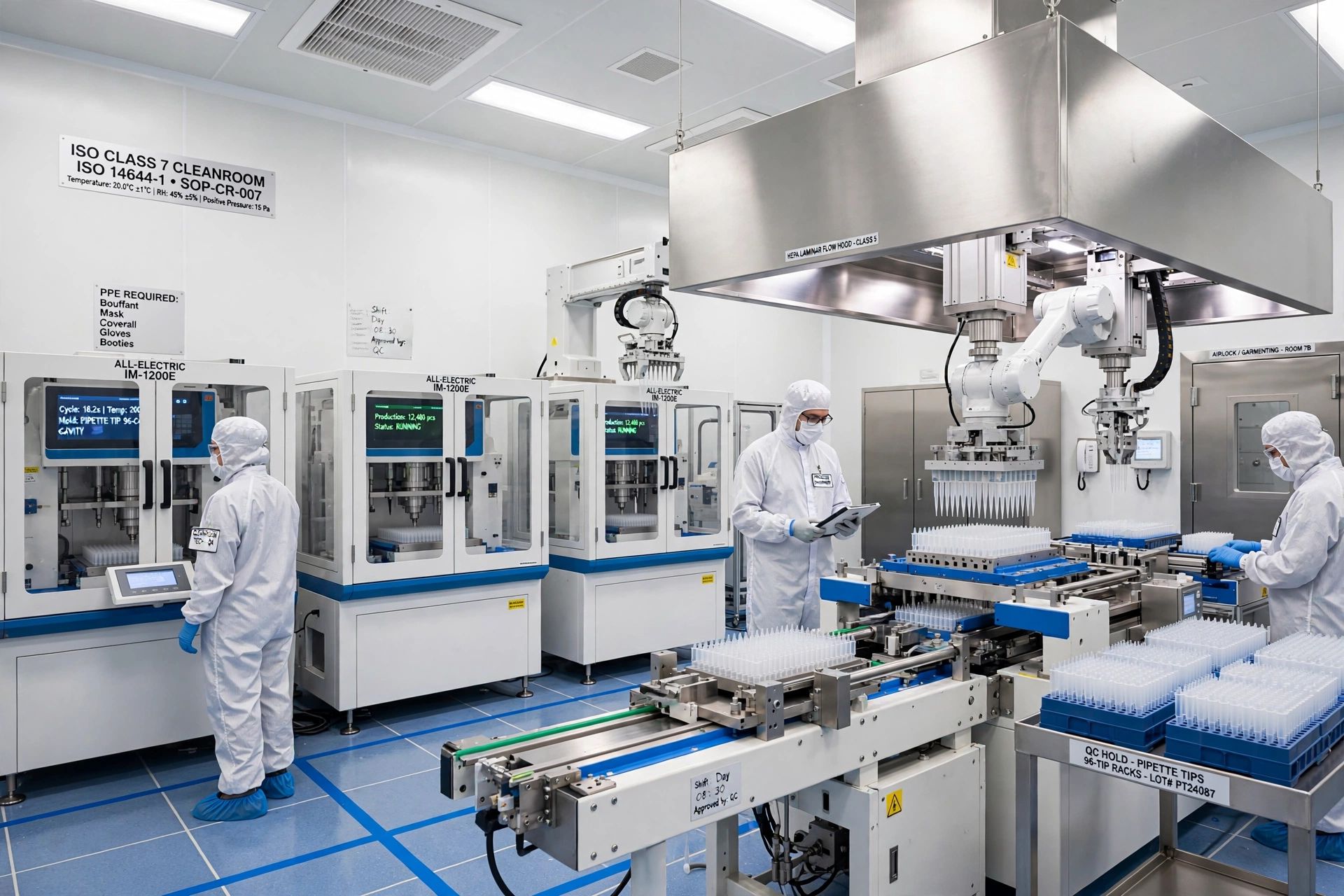
Controlled Production Environment
Our medical manufacturing suites operate under ISO Class 8 (Class 100,000) air cleanliness standards. Key features include:
- All-Electric Japanese Presses: Sumitomo and Fanuc presses eliminate hydraulic oil mist and airborne particulate risks.
- Positive Air Pressure: Multi-stage HEPA filtration prevents external dust infiltration during personnel entry.
- Closed-Loop Resin Feeding: Stainless steel vacuum conveyors deliver resin directly from desiccant dryers into machine hoppers.
Comprehensive IQ / OQ / PQ Validation
Bringing a medical device to market requires exhaustive documentation proving the injection molding process is stable and repeatable.
| Validation Phase | Core Objectives | Documentation Deliverables |
|---|---|---|
| Installation Qualification (IQ) | Verify equipment calibration, utility hookups, and tool design specs | Calibration logs, tool drawing BOM, steel mill certs |
| Operational Qualification (OQ) | Define upper and lower operating boundaries via Design of Experiments (DOE) | DOE parameter matrix, gate freeze studies, viscosity curves |
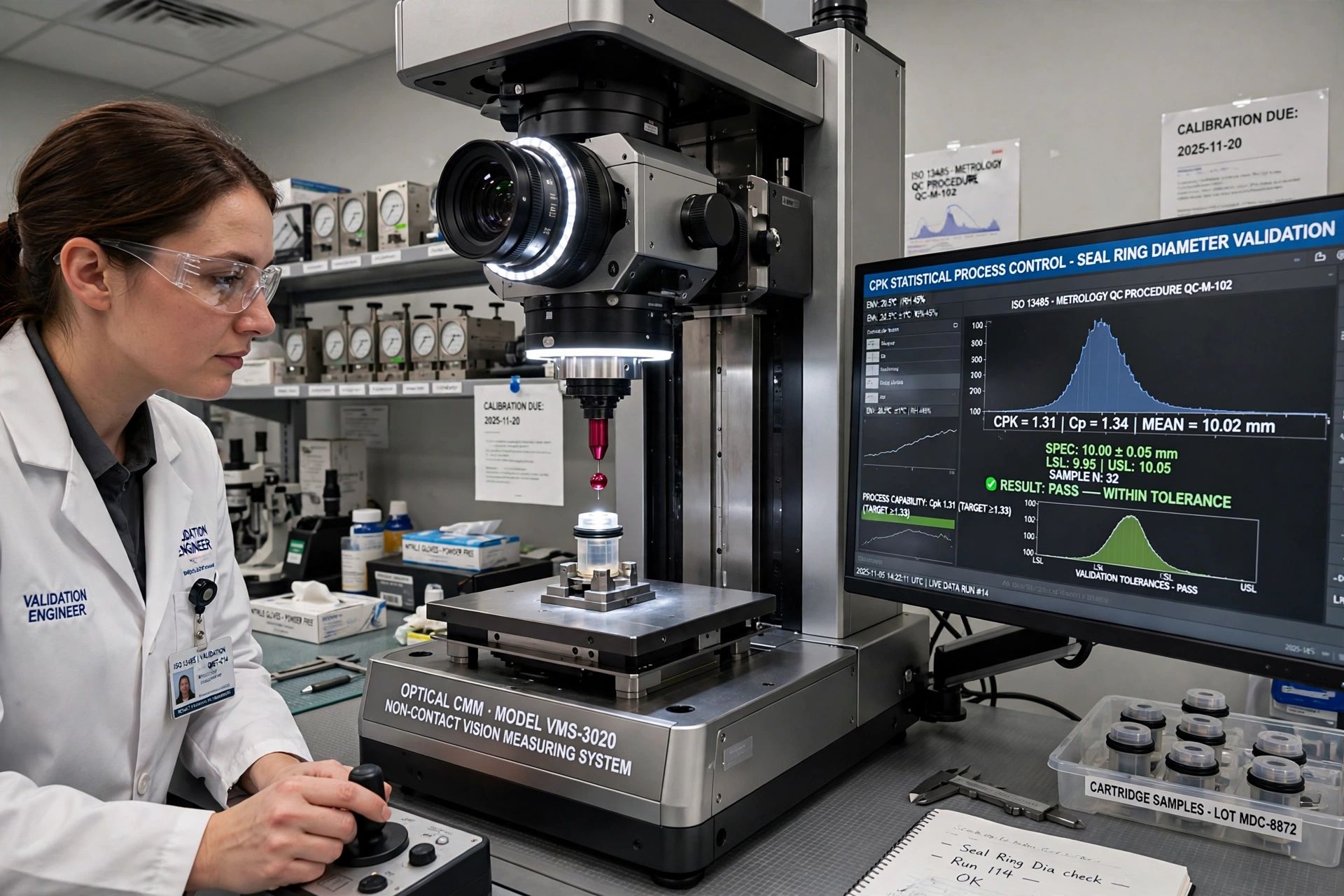
| Performance Qualification (PQ) | Demonstrate long-term process capability across 3 full production runs | Cpk ≥ 1.67 statistical analysis, bioburden testing |
First Article Metrology
Using automated Zeiss CMMs, non-contact optical comparators, and CT scanning, every dimension on the 2D balloon drawing is evaluated across all tool cavities. Explore our dedicated mold trials and quality verification page.
Interactive Medical Tooling Specifier
Select your medical device classification and resin family to determine required cleanroom protocols, steel metallurgy, and validation levels.
Technical Sourcing FAQ: Medical Tooling
Developing a Medical Device or Diagnostic Program?
Connect with Brandon Henderson in North Carolina. We will conduct a thorough DFM review on your microfluidic or medical part geometry, cleanroom requirements, and validation timeline.