
Consumer Electronics Enclosure Categories
Personal smart devices demand thin, lightweight structural architectures that survive mechanical drop impacts while housing dense batteries, antennas, and display components.
Primary Device Verticals
- Audio & True Wireless (TWS): Earbud housings and charging cases featuring micro-hinges, magnetic catch pockets, and acoustic speaker grills.
- Wearables & Smartwatches: Ultra-dense chassis molded from bio-compatible polycarbonates with integrated optical sensor windows.
- Handheld Terminals & Remotes: Ergonomic shells molded with internal ribs that retain lithium battery packs without rattle.
- Smart Home Hubs: Acoustic-transparent speaker covers and dead-front display bezels with hidden capacitive touch controls.
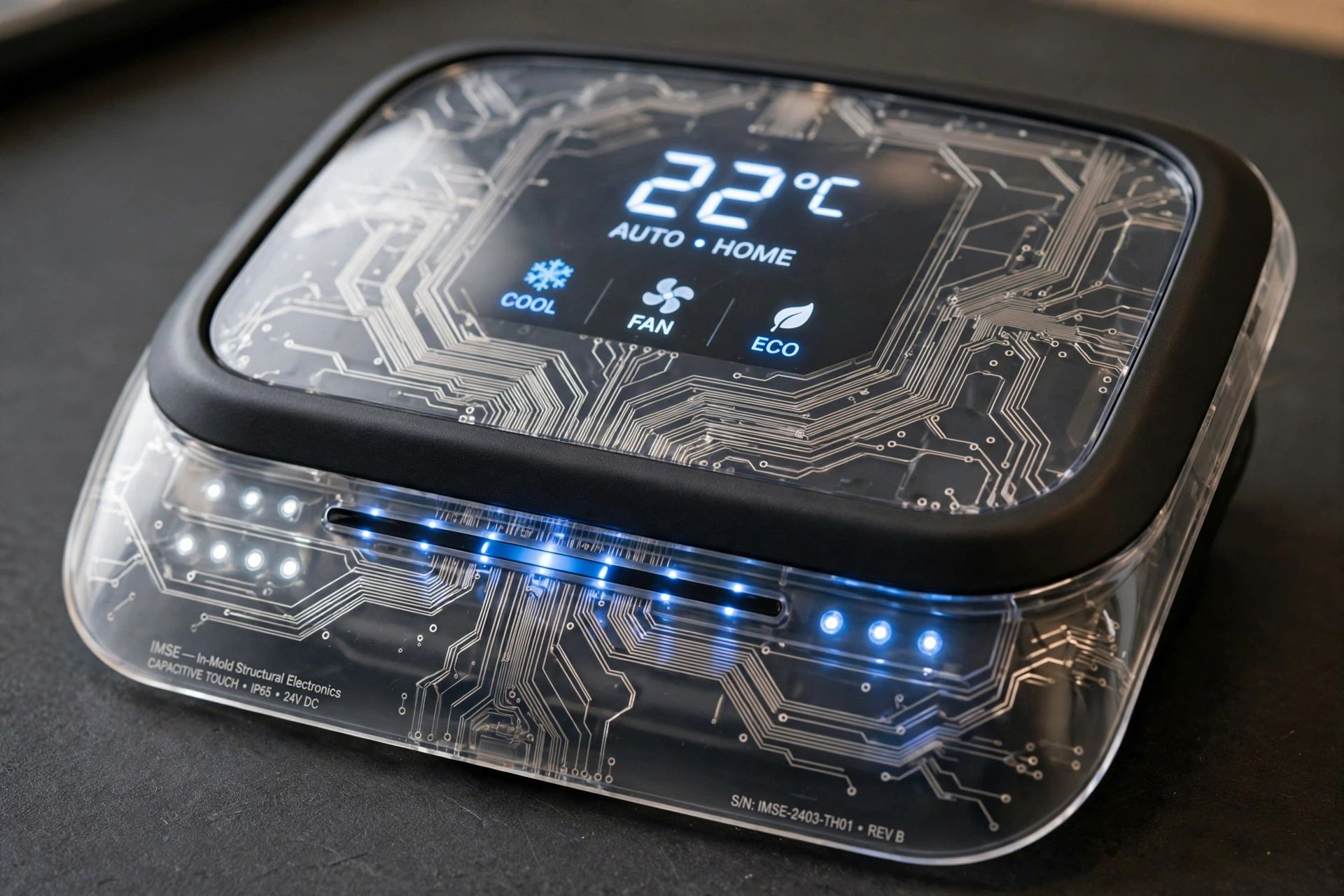
In-Mold Structural Electronics (IMSE)
Tactotek Certified Smart Surfaces
Traditional electronics enclosures require multi-layer mechanical stacks: decorative faceplate, bracket, tactile dome switches, printed circuit board, wiring harnesses, and screws.
Through our partnership with TactoTek, TK Mold USA manufactures In-Mold Structural Electronics (IMSE) tooling. Conductive silver circuitry and surface-mount components are printed onto flexible film, thermoformed into 3D shapes, and encapsulated directly inside injection molded plastic, slashing assembly depth from 45 mm down to 3 mm. Explore our DFM and Moldflow engineering review for film gating.
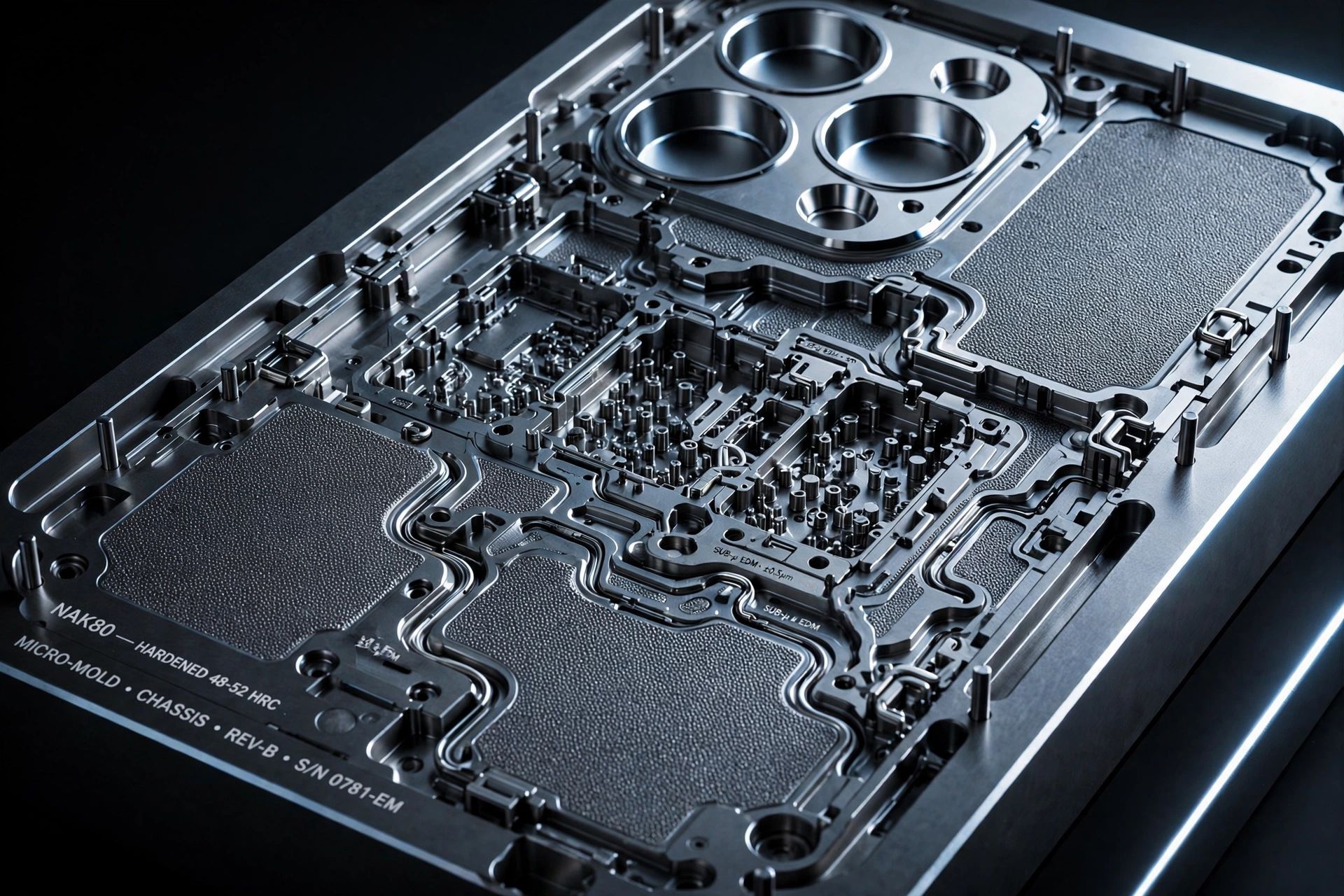
Thin-Wall Rheology & Sub-Micron Shutoffs

Milling Micro-Ribs Down to 0.20mm
Internal chassis skeletons require deep, thin ribs to prevent flex under torsion while leaving maximum internal volume for batteries.
Our toolroom utilizes high-speed Makino CNC graphite electrode milling and AgieCharmilles wire EDM to machine core shutoffs with draft angles down to 0.5 degrees. Polished shutoff faces maintain plus or minus 0.002 millimeter tolerances to prevent parting line flash around USB-C ports and audio jacks. Explore our export molds for U.S. presses.
Acoustic & Ingress Sealing (IP68)
Waterproof ratings on consumer smartphones and earbuds require elastomeric seals molded directly around the perimeter of the housing. We manufacture specialized 2K rotary molds that overmold liquid silicone rubber (LSR) or soft TPE over polycarbonate frames in a single cycle. Learn more on our multi-shot injection molding page.
Interactive Electronics Tool Specifier
Select your electronics enclosure requirements to review recommended steel hardness, machine tonnage, and gating approach.
Technical Sourcing FAQ: Consumer Electronics Tooling
Engineering a Precision Electronics Enclosure?
Submit your enclosure 3D models to Brandon Henderson in North Carolina. Receive an in-depth DFM report addressing micro-rib drafting, gate placement, and acoustic seal shutoffs.