
The Physics and Mechanics of Stack Molds
In traditional single-face molds, doubling production volume requires purchasing a machine with double the clamp tonnage to accommodate twice the projected part area. Stack mold technology bypasses this machine size limitation through mechanical force cancellation.
How Stack Molds Double Throughput
A stack mold positions two complete parting lines in series along the machine axis. A floating center section containing core and cavity sets is mechanically synchronized to the moving platen via rack-and-pinion gears or harmonic linkages:
- Equal and Opposite Injection Force: High-pressure melt enters the center block via a heated transfer sprue, distributing equally into front and rear cavities. Clamp pressure opposes internally.
- Synchronized Daylights: Both parting lines open at identical speeds, allowing simultaneous robotic end-of-arm part removal.
- Footprint Savings: Doubles production capacity per square foot of cleanroom or plant floor without investing in additional heavy press assets.
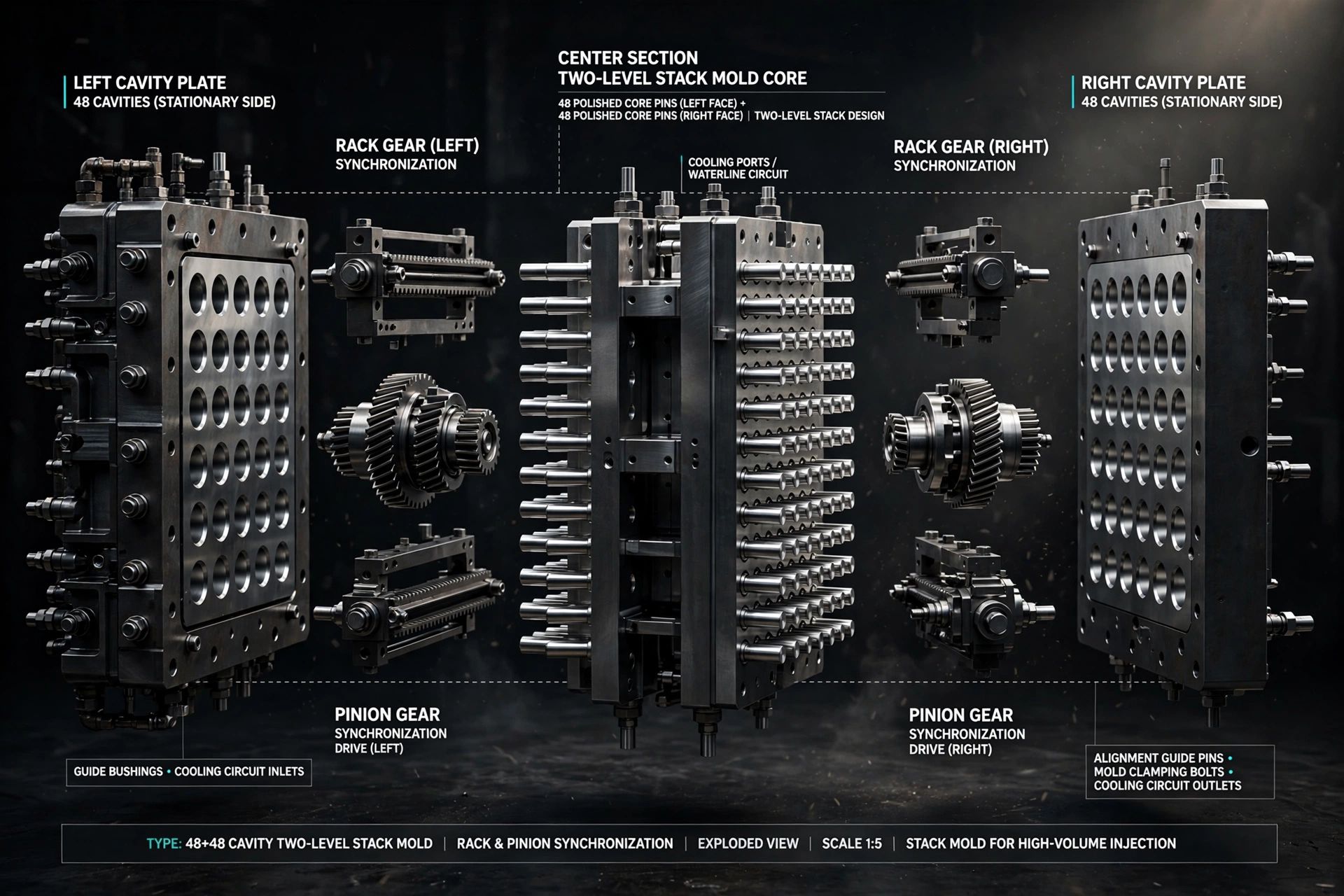
High-Cavitation Molds Up to 128 Cavities
For packaging closures, pipette tips, test tubes, and medical syringes, single-face molds engineered with 32, 64, or 128 cavities require sub-micron component interchangeability. If a core pin on cavity 47 suffers wear, maintenance technicians must insert a spare pin and resume production within minutes without custom hand-stoning.
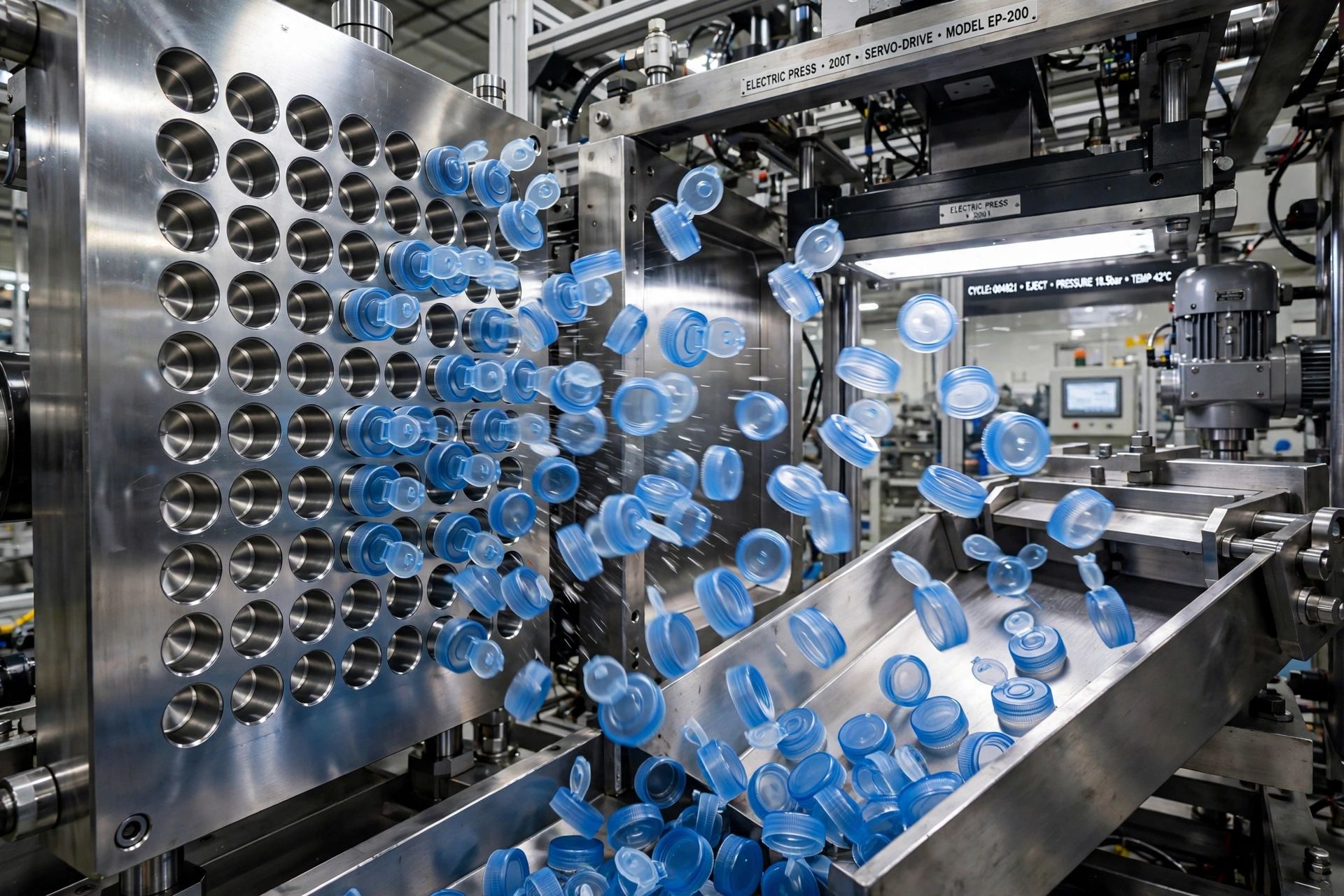
Sub-Micron Cavity Interchangeability
Every core, cavity insert, and stripper ring is CNC ground in temperature-controlled bays down to plus or minus 0.002 millimeters. This allows 100 percent interchangeable spare parts from our North Carolina toolroom. For tooling standards designed for domestic machinery, explore our export molds for U.S. presses.
Naturally Balanced Melt Flow Distribution
Manifold Rheology
In a 64-cavity or 128-cavity tool, artificial balancing through varying gate diameters is unacceptable. TK Mold USA designs symmetrical, naturally balanced hot runner manifolds where flow path length, channel diameter, and directional elbows are identical from the sprue inlet to every single drop. Learn more about our rheological simulation on our DFM and Moldflow engineering page.
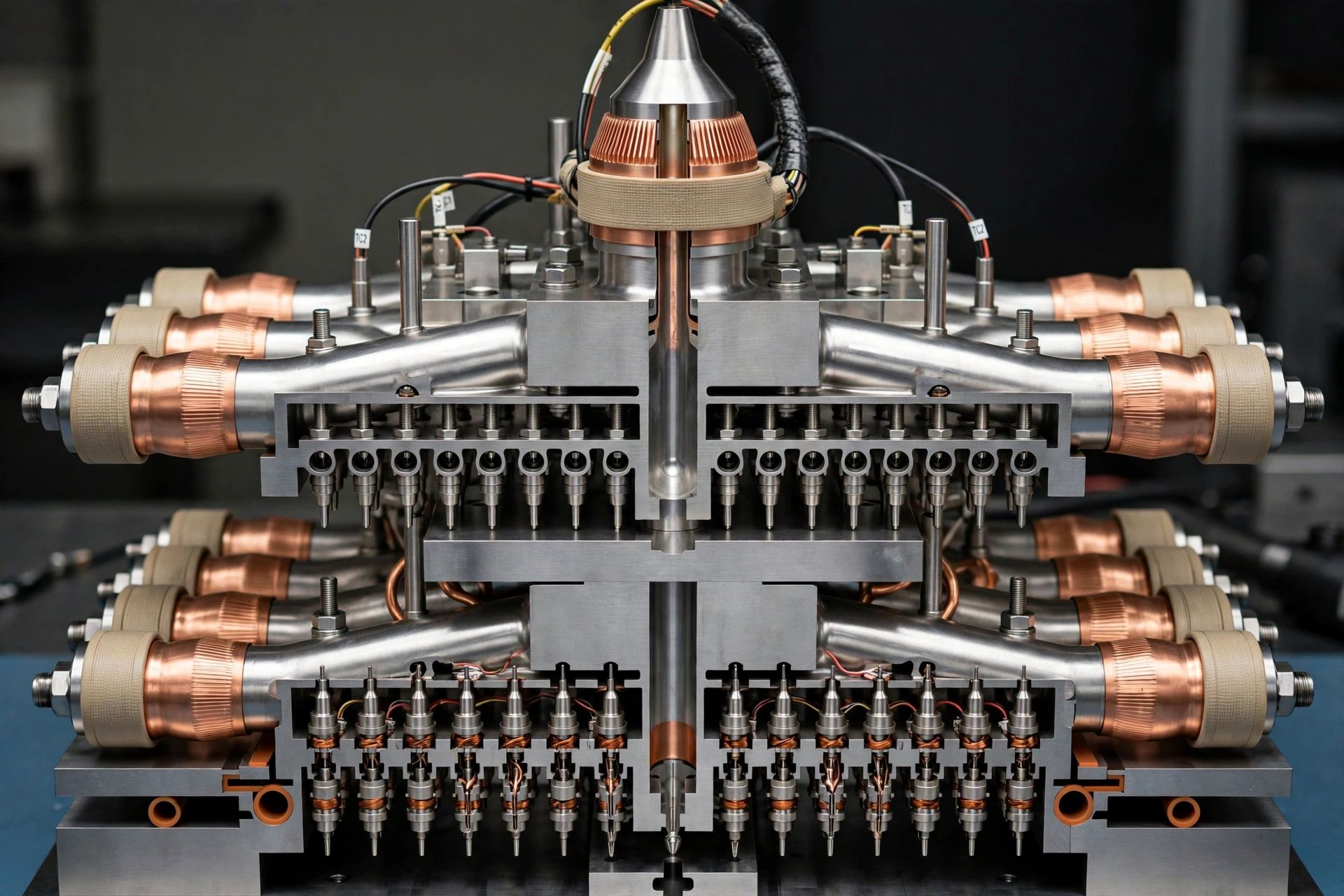
Conformal Cooling in Multi-Cavity Tooling
In packaging and medical production, saving one second of cycle time on a 64-cavity tool operating 24/7 translates into millions of additional parts annually. By integrating 3D printed laser-sintered stainless steel inserts, turbulent water circuits follow the exact circular contour of closure threads and syringe barrels. Explore full technical details on our conformal cooling tooling page.
Interactive Stack Mold ROI Calculator
Calculate your annual piece-part output and machinery capital savings by upgrading from single-face molds to dual-level stack molds.
Technical Sourcing FAQ: High-Cavitation & Stack Molds
Evaluating High-Cavitation or Stack Tooling for Your Next Program?
Connect with Brandon Henderson in North Carolina. We will evaluate your part geometry, press daylight specifications, and annual volumes to provide a comprehensive tooling feasibility analysis.