
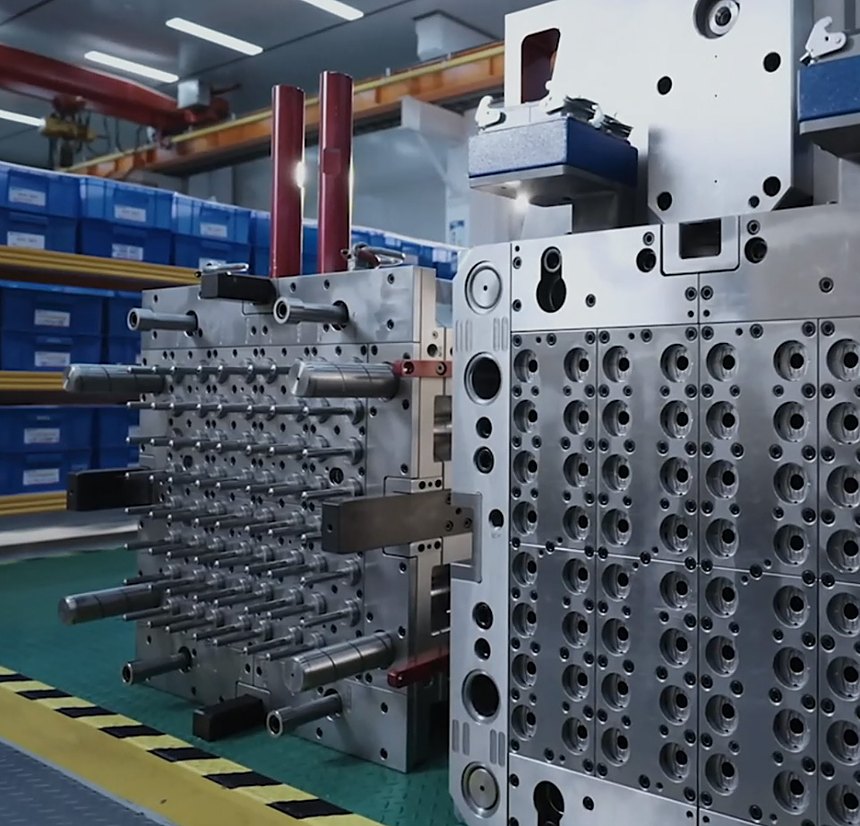
China injection molding cost has two parts: the one time tooling cost and the per part price. For US buyers, tooling built in China commonly lands well below domestic pricing, while the per part price depends on resin, cycle time, and cavitation. The savings are real, but the number that matters is total cost of ownership, not the sticker on the quote.
What drives injection molding cost in China?
- Cavitation. More cavities raise mold cost but lower per part cost at volume. A 128 cavity mold running over 1 million pieces a day changes the math entirely.
- Steel and complexity. Hardened tool steel, side actions, unscrewing cores, and hot runner systems add cost and life.
- Cycle time. Faster cycles cut per part cost. Conformal cooling has reduced cycle time by more than 20 percent on TK programs.
- Resin and part size. Material and shot weight drive the recurring cost.
Where are the savings real?
Tooling is where China pricing is most competitive, often a fraction of a domestic mold for equivalent cavitation. Production molding is also competitive at volume. The savings are real when the mold samples clean at T1 and runs to spec, because rework and downtime are what erase offshore savings.
How to compare total cost of ownership
Do not compare quotes line to line. Compare the full picture: mold price, per part price, lead time, sampling risk, and the cost of a program that slips. A quote that includes a DFM review and T1 approval before production is worth more than a lower number with no plan behind it. TK puts pricing in writing and includes a DFM review on every quote.
Frequently asked questions
How much cheaper is injection molding in China?
Tooling in China commonly runs well below domestic pricing for equivalent cavitation, though the exact gap depends on complexity and steel. Per part savings depend on resin and volume.
Why is China injection molding cheaper?
Lower tooling labor and a deep moldmaking supply base, combined with high cavitation production. The savings hold only when quality and sampling are managed.
What hidden costs should I watch for?
Rework from a mold that does not sample clean, downtime from a program that slips, and unclear tooling ownership. A DFM review and T1 approval reduce these.
Can I get pricing in writing?
Yes. Insist on written pricing for both tooling and per part, plus a committed lead time. TK provides this on every quote.
Ready to price a program? Request a mold quote and get a straight answer on cost, lead time, and manufacturability from a US based team.